
Do you remember the last time you bathed your dog at home?
The bathroom floor soaked. Wet fur slapped against the walls. Towels piled up in the corner, slowly turning damp and musty. Then came the real battle—30 minutes with a loud hair dryer, your arms sore, your dog stressed, both of you exhausted. And hours later, the house still smelled… humid.
This is exactly where pet parenting starts to feel less like love—and more like a chore.
In 2026, pet-smart homes exist for one simple reason: to solve these very real, very daily pain points. Modern pet parents want to give the best care possible, but time is limited, energy runs low, and traditional methods just aren’t efficient anymore.
This guide will help you rethink every room in your home—not to turn it into a tech showroom, but to create a seamless care experience where technology quietly supports both you and your pet. From post-bath chaos to seasonal comfort, from safety to serenity, we’ll walk through how smart solutions can transform “pet chores” into moments of calm, connection, and ease.
At the end, you’ll find a downloadable Pet-Smart Home Pain Point Checklist to help you upgrade where it truly matters.
Before You Begin: The 3 Pillars of a Pet-Smart Home (Solve Real Problems)
Before buying anything, pause. A truly smart pet home isn’t about collecting gadgets—it’s about solving problems that drain you and stress your pet.
Pillar 1: Focus on Pain Points, Not Just Gadgets
Start with friction, not features.
Ask yourself:
-
What part of pet care takes the most effort every month?
-
What moments make my pet visibly uncomfortable?
-
Where do I feel rushed, stressed, or overwhelmed?
Common answers include:
-
Bathing and drying
-
Shedding season cleanup
-
Pets feeling anxious when home alone
-
Worrying about safety while away
When you start here, every solution makes sense.
Pillar 2: Choose Multi-Functional Solutions
Space and budget are real limitations. That’s why one device, multiple functions should be your rule.
Instead of:
-
A heater + a dryer + a disinfecting box
Look for: -
One solution that handles drying, warmth, hygiene, and comfort
The goal is maximum value with minimum clutter.
Pillar 3: Seamless Integration Into Daily Life
The best technology is almost invisible.
If a device:
-
Requires constant manual operation
-
Creates noise or discomfort
-
Adds steps to your routine
…it’s not smart enough.
Always prioritize:
-
Low noise
-
Stable structure
-
Pet-safe temperature control
-
One-touch or automated operation
Your pet’s comfort is the baseline—not an upgrade.
Zone 1: The Command Center — Living Room & Main Areas
Goal: Prevent boredom, monitor behavior, and maintain safety while you’re home—or not.
AI-Powered Pet Camera 2.0
Today’s smart cameras do more than stream video.
Look for features like:
-
Abnormal behavior detection (scratching doors, pacing)
-
Barking or crying classification
-
Auto-tracking movement
2026 scenario:
On New Year’s Eve, instead of endless motion alerts, your camera recognizes stress behavior triggered by fireworks and sends a meaningful alert—so you can respond in time.
Automated Enrichment Systems
Mental stimulation reduces destructive behavior dramatically.
Options include:
-
Programmable ball launchers
-
Auto laser toys for cats
-
Smart toy boxes that rotate toys daily
Pro tip:
Create a “smart routine”:
-
Morning: active play
-
Afternoon: puzzle treats
-
Evening: calm engagement
This mirrors natural energy cycles.
Environmental Guardians
Smart vacuums with pet detection, automated curtains, and adaptive lighting help maintain calm.
Set a “Pet Mode”:
-
Vacuum avoids resting areas
-
Lights mimic daylight rhythm
-
Curtains close automatically during peak heat or noise
Zone 2: The Nutrition & Health Hub — Kitchen & Dining Area
Goal: Prevent food accidents, ensure precise feeding, and monitor hydration.
Smart Pantry & Counter Defense
Food-related emergencies spike during holidays.
Solutions:
-
Counter-facing smart cameras with motion alerts
-
Smart pet doors with weight sensors
2026 scenario:
A guest tries to share food—your phone buzzes instantly, and you gently stop it with remote voice audio.
Precision Feeding Stations
Smart feeders now:
-
Include cameras
-
Dispense medication-level portions
-
Track feeding history
Holiday treats happen—but data helps auto-adjust meals to maintain balance.
Hydration & Health Monitoring
Smart water fountains track:
-
Flow rate
-
Filter condition
-
Drinking frequency
When combined with feeding data, hydration trends can flag early health issues—before symptoms appear.
Zone 3: The Wellness & Grooming Oasis — Bathroom & Utility Area
Goal: Turn grooming—especially bathing and drying—from chaos into calm.
The Real Pain of Traditional Drying
Traditional blow-drying creates three layers of stress:
-
Pets: Loud noise, hot air, fear
-
Humans: Physical effort, time loss
-
Home: Moisture buildup, odors, bacteria
Seasonal problems make it worse:
-
Winter: fear of chills
-
Summer: need for fast, thorough drying
Enter the No-Battle Drying Era
Instead of fighting with a hair dryer, imagine this:
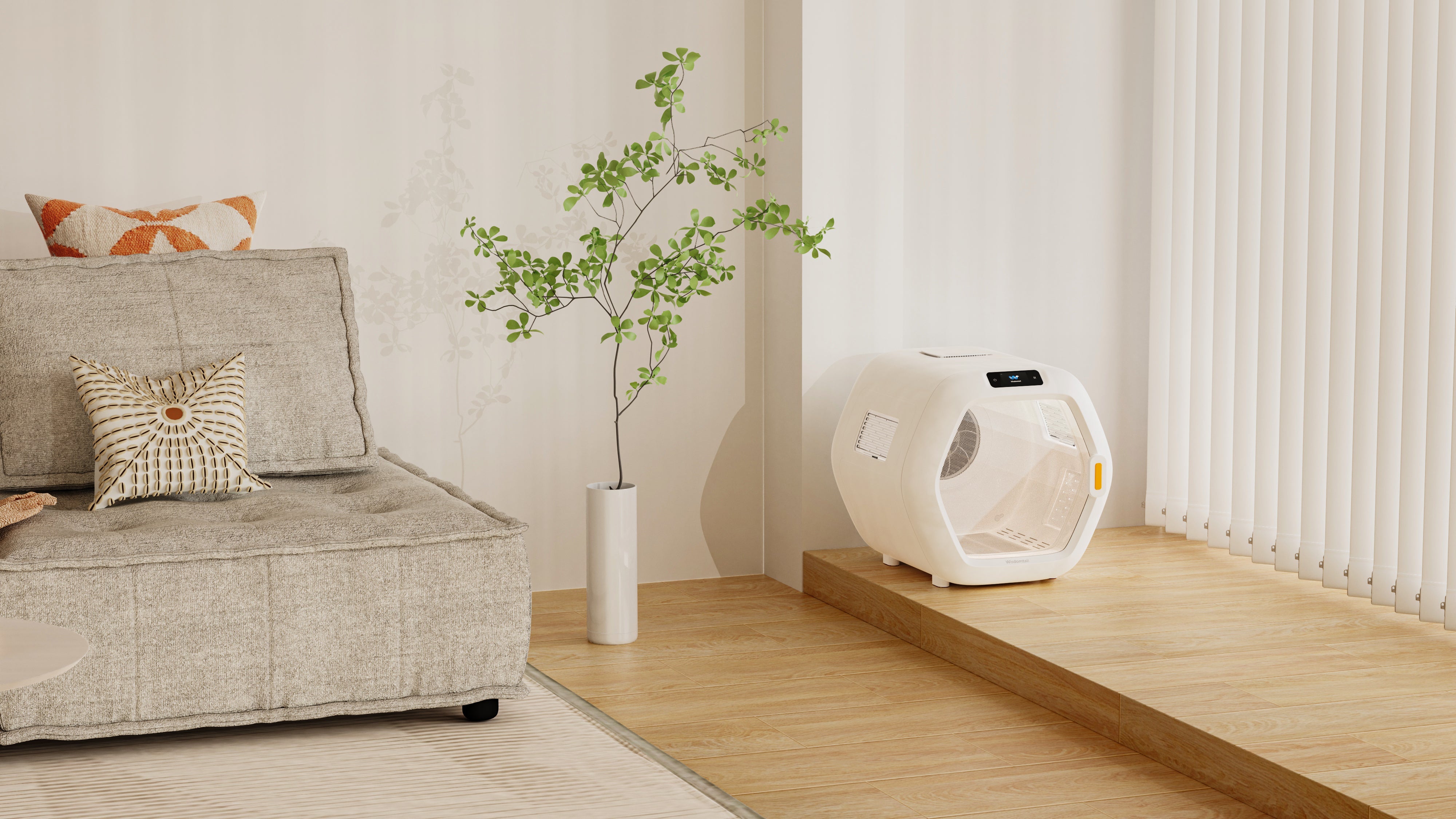
After a bath, you guide your dog into a spacious, warm, enclosed space. No loud noise. Just gentle, circulating air. You set the temperature and time—and walk away to clean up. Inside, your pet lies down, relaxes, maybe even naps.
This is the design philosophy behind modern smart pet drying boxes.
A Practical Example: Wisdomtail D01 Smart Pet Dryer
Without turning grooming into a sales pitch, it’s worth understanding why this type of device works.
What it solves:
-
Hands-free drying
-
Low-noise environment
-
Even airflow reaching undercoat
-
Reduced skin irritation
For many pets, the space becomes a safe den, not a stressful station.
One Device, Multiple Roles
Beyond drying, multifunctional systems often include:
-
Sanitizing dry mode: for towels, toys, accessories
-
Smart warm/cool den mode: ideal during seasonal changes
-
Air circulation mode: keeps interior fresh for daily resting
This versatility is why multi-functional grooming devices outperform single-use tools.
Smart Home Integration Tip
Create a “Spa Time” scene:
-
Bathroom heater adjusts
-
Calm music plays
-
Dryer starts via app
-
Notification sent when finished
Care becomes calm—and automated.
Zone 4: The Sanctuary — Bedroom & Quiet Zones
Goal: Promote deep rest and manage anxiety.
Intelligent Sleep Environment
Options include:
-
Smart pet beds tracking breathing and heart rate
-
Temperature-regulated pet nests
-
White noise machines simulating nature sounds
When outdoor noise spikes, systems can auto-adjust sound levels.
Anxiety Detection & Response
Low-light cameras paired with AI can detect:
-
Restlessness
-
Repetitive movements
-
Stress posture
Automatic responses:
-
Dim lighting
-
Release calming pheromones
-
Play soothing audio
Cross-function tip:
If you already own a multifunctional drying box, its smart warm/cool den mode can double as a luxury sleep pod on non-bath days.
Zone 5: The Security Perimeter — Entryways, Laundry & Balcony
Goal: Prevent escape and eliminate hidden dangers.
Escape-Proof Entryways
Combine:
-
Smart locks
-
Door/window sensors
-
Wearable pet trackers
If a door opens and your pet moves beyond a safe radius, alarms trigger instantly.
Appliance & Hazard Awareness
Smart sensors on:
-
Washing machines
-
Dryers
-
Balcony doors
Before starting appliances, your phone confirms pet safety status—no guessing.
Making It Work: Your 2026 Action Plan
Step 1: Identify Your Top 3 Pain Points
Examples:
-
Bathing & drying is exhausting
-
Pet gets cold in winter
-
Anxiety when home alone
Write them down.
Step 2: Match Solutions Room by Room
Use this guide to map pain points to zones.
Example:
If bathing and winter warmth are your biggest struggles, a multifunctional grooming solution from Zone 3 may replace salon visits and heating devices—saving time and money.
Step 3: Phase It In
You don’t need everything at once.
-
Q1: Safety & monitoring
-
Q2: Feeding & hydration
-
Q3: Grooming & comfort
-
Q4: Automation refinement
Cost vs. Value
Smart pet homes save:
-
Grooming costs
-
Time
-
Stress
-
Emotional energy
The ROI isn’t just financial—it’s peace of mind.
Share:
Beyond the Bow: Designing a Pet-Safe & Stress-Free 2026 New Year's Celebration
Best Small Dogs for Apartment Living: 12 Breeds That Thrive in Small Spaces